

The retail sector is undergoing significant transformations in technology, supply chain dynamics, and consumer behavior. The intersection of these changes with economic uncertainties, such as inflation and an unpredictable job market, creates a swiftly evolving and complex landscape. According to the National Retail Federation (NRF), retail sales in the U.S. are expected to grow between 2.5% and 3.5% in 2025, reaching nearly $5.5 trillion. This growth highlights the importance of innovation, agility, and the adoption of new retail technology.
Navigating this shifting terrain requires a tailored approach rather than a universal solution for future-proofing retail businesses. While challenges are inevitable, proactive measures can be taken to prepare and mitigate risks. The initial crucial step involves examining current trends and formulating adaptive strategies. In 2025, we can see the following trends are poised to reshape the retail landscape, providing insights to keep your business ahead of the curve.
Here are the top innovative retail trends to watch in 2025.
1. Expériences d’achat immersives :
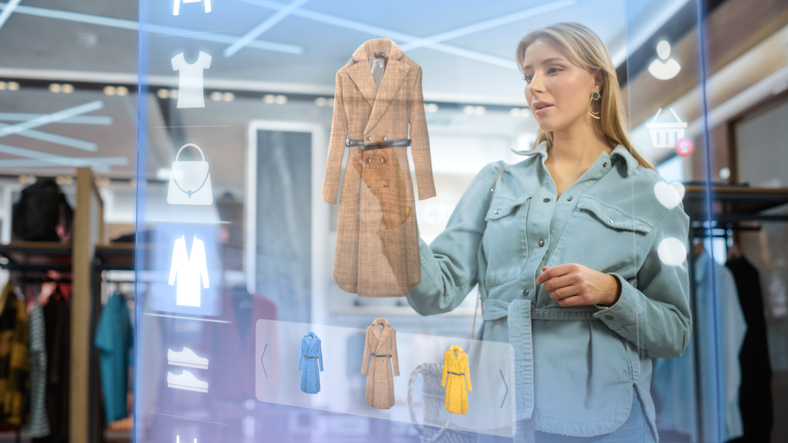
In 2025, retailers are focusing on creating immersive and interactive shopping experiences for customers. Augmented reality (AR) and virtual reality (VR) technologies are being integrated into the retail space, allowing consumers to virtually try on products or visualize how they might look in their homes before making a purchase. This trend not only enhances the overall shopping experience but also bridges the gap between online and offline retail.
2. Pratiques durables et éthiques :
As environmental awareness continues to grow, consumers are placing increased importance on sustainability and ethical practices. In 2025, retailers are expected to prioritize eco-friendly initiatives, from sustainable sourcing and packaging to energy-efficient operations. Brands that align themselves with ethical values are likely to gain favor among conscious consumers, influencing their purchasing decisions.
3. Personnalisation alimentée par l’IA :
Artificial intelligence (AI) is revolutionizing the way retailers understand and cater to individual customer needs. In 2025, we can expect a surge in AI-powered personalization, where algorithms analyze customer data to provide tailored recommendations and personalized shopping experiences. From curated product suggestions to personalized marketing messages, retailers are leveraging AI to strengthen their connection with consumers.
4. Intégration omnicanale :
The lines between physical and online retail continue to blur as omnichannel strategies take center stage. In 2025, successful retailers are those that seamlessly integrate their online and offline channels, providing customers with a unified and cohesive shopping experience. Whether it’s click-and-collect options, in-store digital experiences, or social commerce, brands are finding innovative ways to connect with consumers across various touchpoints.
5. Paiements sans contact et sans friction :
The evolution of payment methods is another trend shaping the retail landscape in 2025. Contactless and frictionless payment options, such as mobile wallets and biometric authentication, are gaining popularity. Retailers are adapting to the changing preferences of consumers who seek convenient and secure payment methods, enhancing the overall efficiency of transactions.
6. Commerce social :
Social commerce surges as retailers tap into direct selling through platforms like Instagram and TikTok. Utilizing these channels is crucial for customer connection, product promotion, and sales boost. Harnessing influencer marketing adds relatability, with influencers engaging audiences in real time, showcasing exclusive offers. Live shopping, a highly interactive trend, mainly attracts younger consumers who are more socially active. In 2025, expect to see an integration of shopping features within social media apps, allowing users to discover, explore, and purchase products seamlessly.
7. Le DTC passe à la brique et au mortier :
Les marques de vente directe aux consommateurs (DTC) sont en train de passer de modèles uniquement en ligne à l’établissement de magasins physiques. Ce changement permet aux marques DTC d’offrir une expérience tangible aux clients et de renforcer leur fidélité à la marque.
La présence physique permet aux clients d’interagir avec les produits, favorisant ainsi une connexion plus profonde. Attendez-vous à ce que les magasins DTC donnent la priorité aux éléments expérientiels, en créant des espaces qui vont au-delà des transactions pour offrir une rencontre mémorable avec la marque.
8. Sécurité et confidentialité :
À mesure que la technologie progresse, la demande de mesures de sécurité et de confidentialité accrues dans le commerce de détail devient de plus en plus cruciale. Les détaillants investissent de manière proactive dans des protocoles de cybersécurité robustes pour renforcer la protection des données des clients, garantissant ainsi un environnement d’achat sécurisé et digne de confiance.
À l’ère des atteintes à la protection des données, les consommateurs sont de plus en plus conscients de la protection de leur vie privée. Les détaillants réagissent en mettant en œuvre des politiques de confidentialité transparentes et en adoptant des technologies de cryptage pour inspirer confiance à leurs clients.
9. Offres et promotions :
Les consommateurs recherchent de plus en plus un bon rapport qualité-prix. Les détaillants réagissent en proposant des offres exclusives, des promotions et des programmes de fidélité, ce qui favorise un sentiment d’excitation et de valeur parmi leur clientèle.
Dynamic pricing strategies, flash sales, and personalized promotions are becoming commonplace. Retailers are utilizing data analytics to tailor deals to individual preferences, creating a more personalized and engaging shopping experience.
10. Logistique améliorée :
Efficient logistics and gestion de la chaîne d'approvisionnement are crucial for the success of any retail operation. In 2025, retailers are focusing on upgrading their logistics infrastructure to meet the demands of faster delivery, reduced lead times, and improved overall efficiency.
Attendez-vous à ce que des innovations telles que les livraisons par drone, les véhicules autonomes et les entrepôts intelligents fassent partie intégrante de la chaîne d’approvisionnement du commerce de détail. Une logistique rationalisée améliore non seulement l’efficacité opérationnelle, mais contribue également à une expérience client transparente et fiable.
Conclusion:
En 2025, ces tendances du commerce de détail soulignent l'engagement de l'industrie en faveur de l'innovation, de la durabilité et des stratégies centrées sur le client. Adopter ces changements permettra aux entreprises de rester pertinentes et de prospérer dans un marché en constante évolution. Qu'il s'agisse d'augmenter la présence en ligne, d'optimiser les processus d'exécution et de livraison, ou de réinventer le magasin physique, l'avenir du commerce de détail consiste à s'adapter aux attentes des consommateurs et à les rencontrer là où ils se trouvent et selon leurs préférences d'achat.
Le monde du commerce de détail en 2025 devrait être un mélange fascinant de Technologie de détail, de durabilité, de personnalisation et de connexion humaine, promettant un parcours passionnant tant pour les détaillants que pour les consommateurs.
Comment transformer les tendances du commerce de détail en croissance
- Auditer la pile technologique. Identifier les lacunes : votre Système point de vente, plateforme e-commerce, inventory system talk to each other in real time?
- Invest in frontline tools and training. Empower your people with data, tools, and clarity.
- Focus on data quality. Good data underpins forecasting, personalization, dynamic pricing.
- Test small, scale fast. Pilot new channels—live selling, AR try-ons, small-format stores—and scale what works.
- Embed sustainability and values. Transparency, ethics, environmental impact are no longer fringe; they shape brand image and customer loyalty.
Adoptez les tendances de la vente au détail de nouvelle génération pour être à l’avant-garde
Retail trends will keep shifting as consumer expectations rise and economic pressures persist. The opportunity in 2025 lies in agility: integrating tech, investing in people, and designing experiences that matter. The future of retailing is bright for customer-centric retailers who constantly improve their operations and find ways to do more with less.
Chez Multidev Technologies, nous nous engageons à servir les détaillants ambitieux qui veulent réussir et prospérer aujourd’hui et à l’avenir. Regardez un Démo du logiciel ERP of ChainDrive and discover why large-scale retailers choose our platform to manage and grow their businesses.